Coming soon
For iPhone and Android

Type any topic.
Get a whole course.

Twig writes it for you, chapter by chapter, at your level. Then it grows a leaf for every session you finish.

Free to join. We'll email you when Twig is live.

Try it

A real course. Tap through a session.

This is How Volcanoes Erupt, a course Twig wrote. Read a few cards, answer a checkpoint, grow a leaf.

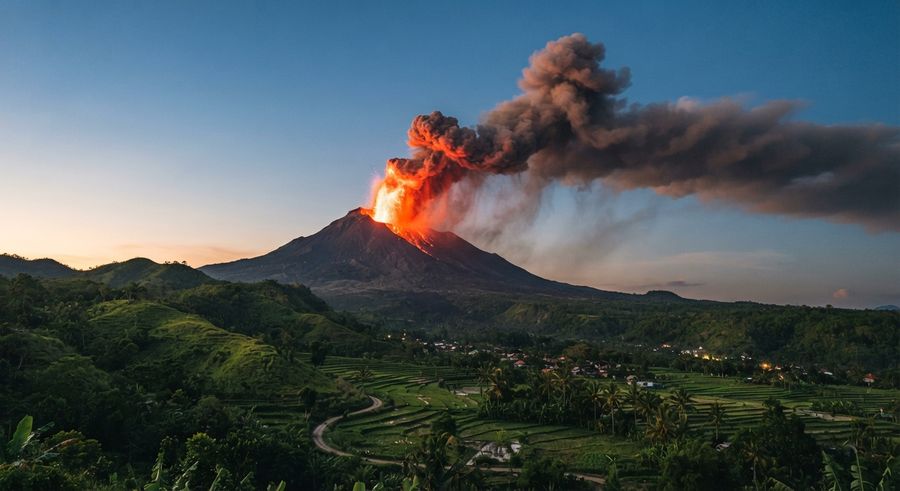
A volcano erupting above green hills at dusk

How Volcanoes Erupt

0 of 6 sessions done
0 of 6 leaves grown

Session 1

Where magma comes from

You will learn what magma is, where it forms beneath the surface, and why the rock below a volcano sometimes melts.

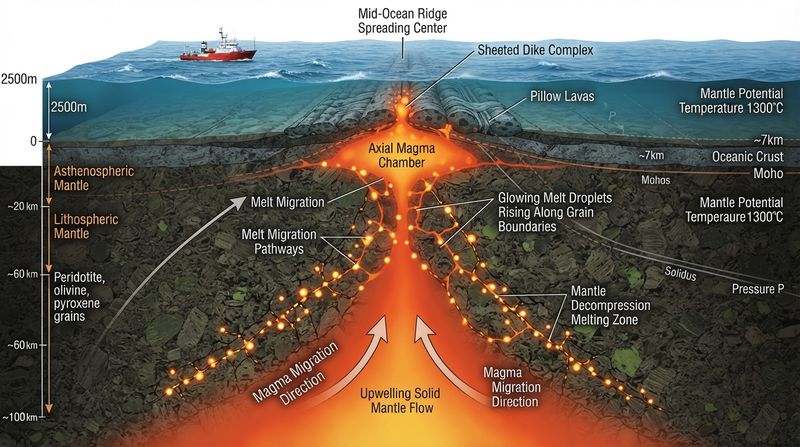
Diagram: hot mantle rock rising under a mid-ocean ridge, with glowing droplets of melt gathering into magma

What comes out of a volcano

When a volcano erupts, what reaches the surface is hot, glowing rock that was once liquid. Underground, the liquid is called magma. Once it reaches the surface and flows out, it is called lava.

The name changes with location, but the material is the same. This course starts underground, because every eruption begins with magma that already exists.

Magma is a mixture

Magma is not simply melted rock. It is a mixture of three kinds of material moving together:

  • Melt: the liquid part, made of molten silicate rock, typically around 700 to 1,300 °C.
  • Crystals: solid mineral grains that float in the melt rather like sand suspended in water.
  • Dissolved gases: mainly water vapour and carbon dioxide, held inside the liquid, much as the fizz is held inside a sealed bottle of soda.

Mechanism one: decompression melting

Hot mantle rock is slowly moving in places, and some of it rises upward. As it rises, the weight of rock above it becomes smaller, so the pressure on it falls. Lower pressure means a lower melting temperature.

The rock does not cool much on its way up, so part of it melts. This is decompression melting: melting caused by a drop in pressure.

A clear example is a mid-ocean ridge, where two tectonic plates pull apart. Mantle rock rises to fill the gap, its pressure falls, and some of it melts.

Checkpoint

Question 1

Hot mantle rock is solid and sits at a steady temperature. It rises without cooling, so the pressure on it falls. What happens to its melting temperature?

Demo with real course content. In the app, Twig writes a course for any topic.

Or tap and swipe inside the phone.
Checkpoints

Quick checks. Instant feedback.

Sessions mix reading with questions. Get one wrong and Twig shows you the right answer and why. This one is from the same course.

Checkpoint

Question

A block of hot mantle rock sits at its melting temperature. It sinks deeper, with no change in its temperature or water content. What happens to its melting?

How it works

From a question to a course.

1

Type a topic

Anything you're curious about.

2

Twig writes your course

Chapter by chapter, at your level.

3

Learn in short sessions

Reading cards with pictures, and quick checkpoints.

4

Watch it grow

Every finished session grows a leaf. You always see the whole course.

Be first to grow a course.

Twig is launching soon. Join the waitlist and we'll tell you the day it's live.

Questions

Is it free to join?

Yes. Joining the waitlist is free.

When can I get Twig?

Twig is launching soon. We'll email you when it's live.

Which phones does it work on?

iPhone and Android, in light and dark mode.